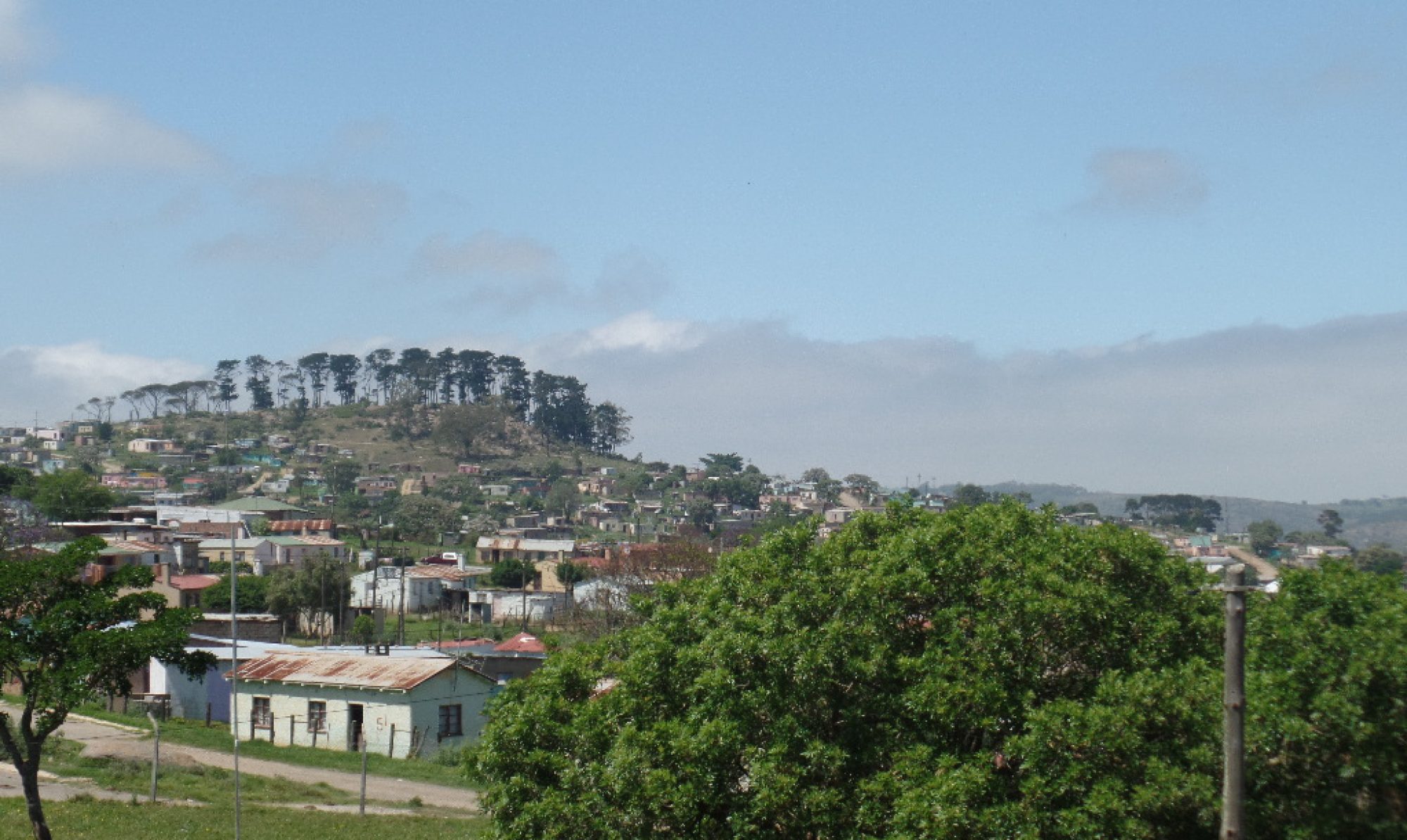
I am an associate professor in international education and development at MF Norwegian School of Theology, Religion and Society. Geographically, my scholarly work focuses mainly on South(ern) Africa. Thematically, I work on three interrelated areas: quality education; sustainable “development” (or rather, the survival of our shared planet) and research methodology. In all three areas, I seek to apply critical, decolonial lenses and I have a focus on indigenous perspectives and ways of knowing. At MF, I am responsible for a one-year course in the social sciences.
Find med on research gate

Publications (selection)
My doctoral study, which informs many of the publications listed below, has been a collaborative endeavour. I would like to acknowledge my five co-researchers, Abongile Ludwane, Margaret Speckman, Noluthando Mhlekwa, Sipho Nuntsu and Farasten Mashozhera. Thank you for sharing and generating knowledge together with me!
Here is a short filmed documentary of our study.
Seehawer, M. (2025). Integrating knowledge systems in South African school education as
crises response: re-focusing on epistemological questions, African Perspectives of Research in Teaching and Learning Journal, 5 (9), 488-503. https://doi.org/10.70875/v9i5article2
Van Norren, D. E., & Seehawer, M. (2025). The Future of Sustainable Development Goals and Culture: Addressing Missing Dimensions from Four Cosmovisions African Ubuntu, Latin-American Buen Vivir, Buddhist Happiness and Nordic Sami Arbediehtu. The European Journal of Development Research (EJDR). https://doi.org/10.1057/s41287-025-00708-6
Khupe, K., Seehawer, M. & Keane, M. (2024). Decolonising curriculum policy research through community centredness. In: M. Stacey & N. Mockler (Eds.): Analysing Education Policy. Theory and Method. Routledge.
Seehawer, M. (2023). Research Agendas in an Ubuntu Paradigm. Scholarship of Teaching and Learning in the South, 7(1), 41–61. https://doi.org/10.36615/sotls.v7i1.351
Seehawer, M., Khupe, C. & Keane, M. (2022). On the impossibility of instrumentalising indigenous methodologies for the sustainable development agenda. In: M. Mbah, W. Leal, & S. Ajaps (Eds.): Indigenous methodologies, research, and practices for sustainable development. Springer.
Seehawer, M., Ludwane, A., Mashozhera, F., Nuntsu, S., Speckman, M. (2022). Creating a sense of belonging. Enabling transformative learning through participatory action research in an Ubuntu paradigm. In A. Nicolaides, S. Eschenbacher, P. T. Buergelt, Y. Gilpin-Jackson, M. Welch, M. Misawa (Eds.): The Palgrave Handbook of Learning for Transformation (pp. 469-481). Palgrave Macmillan, Cham. https://doi.org/10.1007/978-3-030-84694-7_26
Seehawer, M., Ngcoza, K., Nhase, Z. & Nuntsu, S. (2021). Approaching Ubuntu in education through bottom-up decolonisation, conference paper for Pivot 2021 Virtual Conference: Dismantling Reassembling tools for alternative futures.
Seehawer, M. & Breidlid, A. (2021). Dialogue between epistemologies as quality education. Integrating knowledges in Sub-Saharan African classrooms to foster sustainability learning and contextually relevant education, Social Sciences & Humanities Open, 4(1). doi: https://doi.org/10.1016/j.ssaho.2021.100200
Seehawer, M. (2018). South African Science Teachers’ Strategies for integrating Indigenous and Western Knowledges in their Classes – Practical Lessons in Decolonisation. Educational Research for Social Change, 7(1), 91‐110. doi: 10.17159/22214070/2018/v7i0a7
Seehawer, M.K. (2018). Decolonising research in a Sub-Saharan African context: exploring Ubuntu as a foundation for research methodology, ethics and agenda, International Journal of Social Research Methodology, 21(4), 453-466. doi: 10.1080/13645579.2018.14324
Keane, M., Khupe, C., Seehawer, M. (2017). Decolonising Methodology: Who Benefits From Indigenous Knowledge Research? Educational Research for Social Change, 6. doi: 10. 17159/ 2221-4070/2017/v6i1a2
Dissemination and conference presentations (selection)
Seehawer, M. (2022). To crash or not to crash the canon? Seeking to address coloniality in a first-year social science programme in Oslo, Norway. Rai for Convivial Thinking.
Seehawer, M. (2022). To crash or not to crash the canon? Seeking to address coloniality in a first-year social science programme in Oslo, Norway. VAD 2022: Africa and Europe: Reciprocal Perspectives, conference presentation and abstract.
Seehawer, M. (2021, 1.12.2021). A bad moment for Cecil, a good moment for Rhodes, Grocott’s Mail, https://www.grocotts.co.za/2021/12/01/a-bad-moment-for-cecil-a-good-moment-for-rhodes/
Seehawer, M. (2021). Koloniale fallgruver: erfaringer fra aksjonsforskning i Sør-Afrika. Om posisjonalitet – og om hvordan vi som forskere er en del av det vi forsker på. Lecture for Dembra LU STUDent Coffee hour.
Seehawer, M. (2021). Dialogue between epistemologies as an approach to integrating indigenous and Western knowledges in school education. 3rd Biennial SOTL in the South Conference, conference presentation and abstract.
Hollekim, N. & Seehawer, M. (2021). Building back better by building on Ubuntu. Reflections on ethics and trustworthiness within an Ubuntu research paradigm. UKFIET 2021, 16th Conference on International Education and Development: Building back better in education and training? Reimagining, reorienting and redistributing, conference presentation and abstract.
Seehawer, M. , Ngcoza, K. M., Nhase, Z. & Nuntsu, S. (2021). Approaching Ubuntu in education through bottom-up decolonisation. Pivot 2021 Virtual Conference: Dismantling Reassembling tools for alternative futures, conference presentation and abstract.
Seehawer, M. (2021). Integrating indigenous and Western knowledges in South African classrooms. Exploring some of the epistemological tensions. EADI ISS Conference 2021:
Solidarity, Peace and Social Justice, conference presentation and abstract.
Seehawer, M. (2021). How to be an ally? An ongoing (un-)learning journey. Rai for Convival Thinking.
Seehawer, M. (2021). Collaborations for planetary togetherness. The 6th joint Nordic Development Research Conference (NORDEV), conference presentation and abstract.
Seehawer, M. (2018). Ubuntu as a foundation for southern African indigenous ecological research. POLLEN Biennial Conference 2018. Political Ecology Network (POLLEN), conference presentation.
Seehawer, M. (2017). THE SCIENCE INSIDE – South African Stories, Wits Radio Academy.
Mthombeni, T. & Miles, T. (2017). Ulwazi Lwakdala – Indigenous knowledge in Science. Documentary film about my PhD research project, including filmed interview with Maren Seehawer.
Seehawer, M. (2017). How Local Elders Improved Our Science Classes. Integrating Indigenous Knowledges with Classroom Science in Grahamstown Schools. Scifest Africa, South Africa’s National Science Festival.
Phd co-supervision
Sipho Nuntsu (from 2023)
Martha Nyamakuti (from 2023)
Master supervision
Sunniva Åndestad (2018). How has #Feesmustfall affected students in Cape Town? The Role of Racial Division in the #FeesMustFall Movement. Exploring students’ personal experiences of the protests and the racial division in the #FeesMustFall movement in South Africa. Oslo Metropolitan University: Faculty of Education.
Regina Young (2018). A theoretical and conceptual exploration of the relation between Global Architecture of Education and Life Skills development for refugee girls. Oslo Metropolitan University: Faculty of Education.
Linn Elfrida Hepsø (2017). Sex workers way to empowerment through education. Master thesis in Multicultural and International Education. Oslo Metropolitan University: Faculty of Education.
Nora Talleraas Hollekim (2017). Community based research – A case study of ontological dynamics in developmental collaboration with rural women in Karamoja. Oslo and Akershus University College: Faculty of Education.
Oda Mari Skaanes (2017). School Violence and a Culture of Violence – How can we make a change? A Case Study on School Violence at a School in the Cape Flats, South Africa. Oslo and Akershus University College: Faculty of Education.
Cynthia Ah-pew (2016) Exploring Quality Education in Mauritian Primary Schools. A case from a ZEP school. Oslo and Akershus University College: Faculty of Education.
 Researching education in a globalised world